Thursday, December 19, 2013

A Return To The Streets

When snow closes the trails in the woods the cement sidewalks of the city become our weekly walking interest. The usually flat terrain is not challenging but it keeps us moving through the cold winter months until we can return to the needle-strewn trails of Mt. Hood. Today's city walk, so named from Laura Foster's Portland City Walks, toured the Irvington to Sullivan's Gulch neighborhood. This 4.6 mile walk weaves through the neighborhood north and east of Lloyd Center Mall.

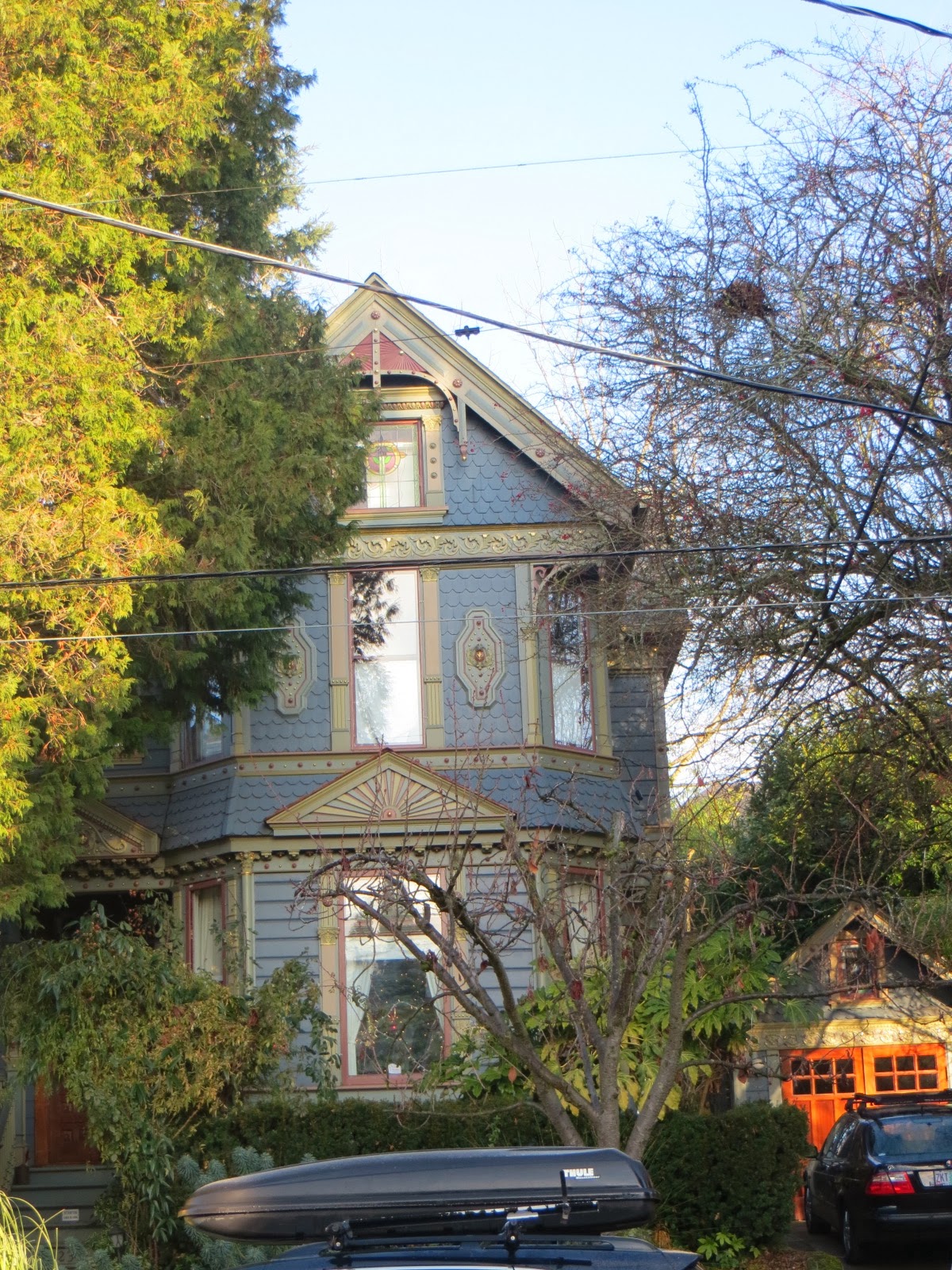
Irvington is a banquet of architectural diversity originating in the late 1800's as a platted area for professionals and executives. The homes are generally large, multi-storied, porched and bordered by wrought iron or stone fencing. Most have been well-maintained through more than 100 years of existence, many currently sporting colorful paint combinations and appropriate restorations.

The range of architectural styles touches on Colonial revival, Craftsman, Queen Anne, Prairie, neo-classical foursquare, Bungalow and English manor. Foster's book fills you in on the history of each house, its original owner and the various businesses that flourished in young Portland because of these people.

The trees and shrubs, planted so many years ago, have grown to gigantic proportions and in some cases dwarf the houses. Some of the trees lining the streets are from foreign origins, such as the Pterocarya fraxinifolia or Caucasian wingnut trees of Iran or the out-of-zone plantings that successfully thrive courtesy of the Cistus Nursery owners who live in the neighborhood.

Homeowner took our picture
One of the amazing experiences on these city walks is the unsolicited willingness of homeowners to invite our group of talkative and curious women into their yards and homes to view the unique features of their properties. Today one woman came out of her house to listen to the "history lesson" as we viewed her gingerbread-trimmed porch and discussed the origins of the neighborhood and her street in particular. Later in the walk another woman saw us chatting about her house and invited us in to see her Christmas party decorations and to tour her richly colored and appointed interior. We felt as if we had made two new friends today!

After three hours of strolling we determined to make a beeline for the Cadillac Cafe for lunch. This Portland landmark showcases a pink Cadillac in its garage showroom and serves hearty and tasty fare for breakfast and lunch. The waitstaff is quietly attentive and polite, the atmosphere upbeat and the line to be seated winds around the building. Plan accordingly, especially on weekends for breakfast.

A stop at the Helen Bernhard Bakery on Broadway completed our city walk for the day. We will resume our explorations of the city in the new year, so until then Merry Christmas and Happy New Year!


Gold painted detail 

Wisteria-framed porch on a Bungalow


Admiring the architecture

WPA mural at Irvington School

Mural panel by Edward Quigley 1936

A tiled lizard as neighborhood art

Some paint combinations should be reconsidered

170 nurse ornaments deck this tree

Gracie poses on her stairway

Rich color and seasonal appointments

Whimsey 

Colonial Revival

Tree growing around old pipe

Gargoyle watching over you!

See's Candy owner's house

A novel lending library idea

100 year old tree root bursting above ground

Ancient cement urn


Color!

Old fashioned barber shop on Broadway

Repurposed church

The pink Caddie

Post-lunch humor

Helen Bernhard bakery offerings

B & B

Lion plank

Fence decor

Old and new blend, sort of

Apartments

Brick, shingles and aggregate


Thursday, November 7, 2013

Cruise to Colville

The open road awaits
Sidelined from hiking by an inflamed knee, I turned to four wheels to
propel me to points of adventure for the weekend. A dear friend was having a birthday on Halloween so what better time to join the party! As our calendars coincided with open space, a friend and I loaded up on car snacks and beverages, suitable entertainment should the conversation lag (which it didn't), clothes for the occasion and headed for the open road. Destination: Colville, Washington in the northeast corner of the state.

The Portland weather made it easy to leave, gray clouds and raindrops threatening overhead. The long journey of seven or more hours prompted us to leave ahead of traffic at 6:30 in the morning. Windshield wipers screeching, we navigated our way slowly eastward, riding the early wave of morning traffic. Once across the river, we began to sail along, chatting in a catch-up manner about our lives and loved ones. The Columbia River Gorge, always an impressive stretch of the drive, was lined with colorful trees, enlarging waterfalls cascading down the basalt cliffs of the southern side of the river and the oft-present wind.

Magic happens at MP 59 when the air dries out a bit, the clouds evaporate and blue sky runs to the horizon as you enter the Hood River area. The trees change from Doulas fir to pine, the green hills become brown with grass and rock as their only covering and the road opens to fewer and fewer vehicles. Towns diminish in size as the traveler passes The Dalles with acres of hilltop wind machines, pulp trees and green irrigation circles covering the flat, open landscape.
Aged fencing lines property

Turning north towards Umatilla and the Tri-Cities on 395 brought
memories rushing back as trips to college flashed through my mind. It wasn't so populated then, and with the city traffic picking up we decided to skirt west around Richmond and Spokane by taking 231 into Colville. This brought us onto a two lane country road, mostly untraveled but newly paved and smooth, gentle curves and hills taking us through Palouse country, some of the most fertile farmland in the United States. The crops had already been harvested, but the stubble remained like a kid's newly buzzed blonde head, soft and even. Aging wooden fencing, barbed wire attached, leaned tiredly along property lines, suggesting vast stretches of land ownership.

Golden tamaracks amid the pines
Arriving in Colville at mid-afternoon we were greeted by pine-clad hills dotted with golden tamaracks, those quirky needled conifers that turn color and drop their needles in the winter only to re-green in the spring. The air was chilly and hinted of snow to the nostrils. The town has an interesting history linked to the Hudson Bay Trading Company of the late 1800's. We were greeted by our lovely birthday lady and proceded to settle in for the duration of the weekend, getting acquainted with the cat and dog and watching the deer gather for their sunset feeding in the pasture below the house.

 Morning-feeding quail, deer and a stovepipe captive starling greeted us as we sipped our fresh coffee and spooned apple crisp into our mouths. The cat was riveted on the wood stove  by the scratching sounds of yet another hapless starling that mysteriously and shall I say stupidly plummeted down the cold stovepipe to rest on the damper shelf. A sigh of resignation emitted from our hostess as she prepared for the routine of freeing the bird, a messy process at best. Corralling the cat first, she donned heavy gloves, opened the stove door and removed the damper shelf, waiting for the bird to crash into the ashes and make a blackened escape. We tried to help by holding up a sheet to direct the escapee to the open door to freedom, but in the excitement of our first escape experience we dropped the sheet just as the bird flew up and towards the picture window. Crash! Vases on the windowsill rattled as the frazzled bird attempted to fly through the pane. Experienced hands grabbed the bird carefully and tossed it out the door. Just another busy morning in Colville.

Hapless starling awaiting release
 Shopping and lunching our way through downtown  took up our afternoon as well as a trip to the local library with its basement book sale. Our hostess, a retired librarian, loaded us up with boxes of good reads at a bargain. Happy with our acquisitions, we headed home for a steak dinner as only a transplanted Texan can prepare it. Conversation filled every crack of time as we swapped stories of all kinds and traded recipes and foodie experiences.
Rainbow
Quick weather change
Winter fuel


Bunker
Morning snow warning
Princess

 Evening movies rounded out the visit, complimented with popcorn and jammies. Farewells exchanged in the morning, we headed for the reverse of the trip, noting the sprinkling of snow on the hills warning of the deeper stuff to come. We chose a few alternate routes to explore as we made our way along country byways with their occasional outbuildings, farm equipment groupings, baled hay and bright red barns standing in sharp contrast to the beige fields.

The sun provided a spectacular setting as we crossed the mighty Columbia once again. Those familiar rain clouds darkened the horizon as we drew closer to home. A happy birthday weekend of shared joy and encouragement was the outcome of our travels as well as captivating views of the eastern side of the state. It is a journey for the traveler with time to stop and explore little towns, side roads and in the summer, farms with produce stands. Enjoy a little get-away to Colville and take your passport so you can jump into Canada for an afternoon exploring our northern neighbor.


The mighty Columbia River


Garden Sharing

Suplus boxwood
The excitement of a fresh plot of garden space or an entire yard for that matter makes it irresistible to receiving new plantings. My theory of gardening is "no dirt showing" and to that end I built my gardens from the ground up with offerings from my mother-in-law's garden, friends' yards and plant sales. Through the years, the yard's bareness began to fill in until it hit the jungle phase. That was when the plants and trees were competing for space and not thriving at their optimum.

A young friend with a new yard to fill asked for some starts and I gave her free rein to dig through the yard. She filled a pickup bed with samples from many of the plants. When she left, the garden seemed barely touched and as spring came the plants seemed to thrive once again, making up for their lost pieces with renewed strength!
Preparing to dig

A period of several years of inattention gave the garden an unbridled opportunity to overpower this gardener and become an uncivilized mass of overgrown plants, mossy bricks, Johnson grass and unpruned trees. The balance of control versus nature tipped to a riotous mass of greenery that one person could only struggle with to keep from totally returning to nature. A merciful and talented gardening friend spent two entire days hacking, digging, pruning back the jungle as well as pulling out a fair share of plants for her garden and subsequently returned my yard to me in a manageable state.

When some fallen trees opened up the yard to more sun, I decided to share once again so that I could reclaim a kitchen garden space. A call went out to anyone wanting free boxwood and other plant starts. One friend came to claim a few shrubs and the digging kept the wheelbarrow filled with other garden delights: Siberian iris, Japanese anemone, hostas to name a few.

Another friend plans to come and dig more boxwood and then case the garden for other useable starts for her new yard.  As I gaze about my own yard my eyes catch reminders of friends and fellow gardeners via the plants they have shared with me over the years. Thanks Vicki for the variegated hydrangea, mom for the hostas, my mother for the roses and calla lilies, grandmother for the Cecil Brunner climbing rose via my uncle, Mike and Holly for the dahlias, Tammy for the yellow loosestrife that crept under the fence, to mention a few.  Private plant sales, end-of-season grocery store sales, nursery close-outs, the local community college horticulture sales and the occasional splurge for a coveted hardy geranium or peony. So many wonderful memories!

Room for vegies now!
 When you have plenty, think of others who are just starting or starting over and share the bounty with them. It can only serve to stimulate your own garden to spread in healthy growth, making endless ways to continue the gardener's practice of sharing the wealth! Contact me for starts. I have a jungle waiting to sprout!


Come fill  your trunk from my garden

Tuesday, October 29, 2013

Autumn Apple Expedition

Mt. Hood overlooks fruit country
The spate of late October sunny days lured me and my fellow apple adventurers to drive up the Columbia Gorge to the aptly named Fruit Loop which circumnavigates the orchards above Hood River, Oregon. This is serious apple and pear country. The orchards offer fruit by the bin as well as cider, brandy, wine and other delights for the day tripper. We happened upon a u-pick opportunity at the Kiyakowa Orchard just out of Parkdale. We could pick right in the orchard and select anything that the commercial pickers had left and only pay 35 cents per pound!

Golden Delicious apples
Being bargain hunters we jumped at the chance to save some significant money, have a close-to-nature experience and saunter through a beautifully situated orchard of over 50 varieties of apples. With boxes and wagon we trundled along, orchard map in hand, and spied Golden Delicious, MacIntosh, Rome Beauties, Cameos, Jonagolds and a smattering of other varieties hanging shyly behind the turning leaves. As we reached into the trees, more and more apples revealed themselves and the picking rush was on.

Giant pumpkin on display
The experience of picking your own food is one that every person should endeavor to acquire. You can observe how your food grows, meet the people who cultivate it, learn how much work it takes to bring it to your table via the grocery store and appreciate the cycle of nature that underlies it all. The vast enterprise of this one orchard multiplied by hundreds of others similar to it is but a mere blink on the map of our entire nation's food supply. A trip to the orchard is a great educational opportunity for kids as they see that apples grow on trees, come in a multitude of colors and aren't waxed naturally. The free bites of a freshly picked apple are crisp, sweet and juicy and somehow taste all the better for being eaten in the shadow of a magnificent, snow-capped mountain.

Pears in many colors

Pickers in the glare of October sunshine
Bins of picked apples


Fruit hanging invitingly on row upon row of trees simply overpowers self-control of those who plan to can, freeze, dry and bake apple products. The siren song of "just one more apple" works to fill box after box of luscious apples, dreams of delicious desserts dancing in my head. Before I knew it I had picked 250 pounds of apples and struggled to find room in the car for them all. What was I thinking? Once again my eyes were bigger than my, er, kitchen capacity. But what a joy to share the bounty with others and to store some away for winter eating and cooking as well as line the cupboard shelves with jars of pink-tinged applesauce, fill the freezer shelves with bags of pie-ready filling and smell the distinct aroma of drying apple slices in the food dryer.


Half of our haul
Upon arrival at home I began to quickly peel the first batch of apples for an apple tartin, simmering quartered pieces in a caramelizing pan of butter and sugar until tender, then topping the apples with a rich pie dough to bake in the oven until done. After cooling the pan briefly, it is flipped upside down on a platter, the caramelized apples forming a lovely pattern over the baked shell. This dessert is best eaten warm with a dollop of whipped cream or a scoop of ice cream, although this could be construed as gilding the lily in some circles.

Knowing the treat would be short-lived, I dove into the day's pickings to begin preparing more apple slices for a huge apple pie. This will be eaten for breakfast, lunch and dinner over the next few days, growing more tasty with each passing hour, should it last that long. Applesauce is on the schedule for tomorrow, an easy task of washing, quartering and cooking the apples until soft and then pressing them through a colander to remove seeds, skin and stems. A canning process completes the work and preserves the sauce for chilly winter mornings when a cup of fresh coffee and a piece of raisin cinnamon roll bread toast yearn for a fruity companion.

Fresh apple pie
The bounty of our Northwest farms can enrich your life when you reach out to pick of its products. A trip to apple country is available up to Thanksgiving time when the orchard sales offices close. Filberts and walnuts are just coming on the market in the North Plains area orchards. Check out here and here for more information on local availability. You'll never go wrong getting  your food from the source, and you just might learn something new along the way! Plan a trip for yourself and family or friends. It's a great way to impress out-of-towners too. Now excuse me while I get back to my kitchen.

Friday, October 18, 2013

Suburban Gardening

Books to get you started
Sitting on my deck with the morning's cup of coffee, awash in the October sunshine and wrapped in a lap quilt, I contemplated the possibilities of adding an herb garden to my already overstuffed yard. Originally I had planned and executed a small French vegetable garden mixing flowers, vegetables and fruit trees into a single gardening space. The salad greens, nasturtium blossoms and radishes provided a wonderful break from the winter broccoli and cabbages. The little clumps of marigolds, planted to keep bugs at bay, were golden lines of separation between lettuces, cucumbers and peas. Ann Lovejoy, a Northwest gardening author, had a great influence on my gardening in those days.

The espaliered row of 13 apple and pear trees were slow to bear fruit, but eventually gave us bowls of 10 varieties. Blueberries apparently didn't like our location and were limited in their crops. Tomatoes were abundant in the early years but have dwindled to sad, green globes recently. Herbs were hit and miss and there was always a watchful eye kept on the mints to be sure they didn't escape and end up ruling the garden.

Eventually the perimeter trees in neighboring yards turned my once sunny yard into a shade garden where vegetables failed to thrive, roses sogged out in damp areas and the whole yard generally tilted towards the early summer sun angle just to get a little warmth. When a couple of old cherry trees spontaneously fell over into our yard recently, the sun began to return to spots of the yard and the possibility of food gardening took root once again. A strawberry bed was the first project, made from repurposed interconnecting pavers stacked to make a wall for the soil. The berries happily scrambled over the surface of the space, sending out new runners and flowering with abandon so that I could pick a bowl of fresh fruit every morning for my breakfast.

Backyard produce
A dilemma loomed for further development. The former vegetable garden had gradually become a holding garden for extra flowers and shrubs so that in order to reclaim it, I would have to find new homes for the plants or toss them away. The lawn was another issue. It was a great play space when the family was younger but now serves as an outdoor extension of the heavily used deck. I decided to turn to some  neighbors who garden to see how they handle their spaces.

One neighbor had the unusual opportunity to completely redesign her yard and garden space. She chose to eliminate all lawn areas and concentrate on food production with the dream in mind of being nearly self-sufficient. She employed a garden designer to give her yard form and flow. This was achieved by designating areas of specific use in ever-repeating concentric arches ranging from the back door to the back fence. With a bit more southwest exposure and significantly less shade than my yard, she has been able to compile an amazing list of edible plants and trees: white peach, Pawpaw, almond, Asian pears, apples, persimmons, mulberry, blueberries, black currants, huckleberries, Goji berry, Sea berry, Goumi berry, Aronia or chokeberry, raspberries, blackberries, strawberries, various herbs, kiwi, pineapple guava, golden hops and Akebia vine. From this handsome collection of producers she gathers enough to eat in the season but does not yet freeze, can or dry any for winter use. As a vegan, she supplements her garden meals with grains and nuts.

Aronia (L) and Persimmon (R) juices
Another gardening neighbor with yet a different orientation to the sun made the move to raised beds when ground level work became too difficult. The 4 x 8 foot beds are made of untreated lumber and are filled with purchased gardening soil and homemade compost. Plastic bins with holes drilled for drainage compliment the beds. This gardener is a carnivore and fabulous cook so her garden reflects a different selection of edibles: artichoke, garlic, herbs galore, a bay leaf shrub, elderberry shrub, gooseberries, currants, a cherry tree, blueberries, strawberries, potatoes, oca and yucan tubers, green beans, salad greens, bok choi, a fig tree, fava beans, asparagus, beets and kiwis. This garden supplies quick and easy companions to her barbequed or oven-cooked meals and offers a theraputic outlet for her creative energy. It bears year round in one form or another and she freezes and cans for winter consumption. She and her husband also make their own wine and cultivate friends with food so that sharing is an aspect of their gardening efforts. They additionally glean through a gleaning association that provides food to the Food Bank. They also have a lawn.

Asian pears
If you decide to expand your suburban lot function to include a food-source garden, there are many points to consider: sun exposure, willingness to work for your food production, giving up play or mowing spaces, organic or not, how much food will my space and efforts yield, what do I like to eat, how do I grow what I want. Research is readily available online here, here, here and here, at the library or from your local Extension Agent. Some of your neighbors may be experienced and would be willing to share what they know. The opportunity to grow your own food, save money in some cases and know how your food has been handled are just a few of the rewards of suburban gardening. Start your plans today!
Turning the compost barrel


Beets and yucan in buckets

Late season raspberries
Persimmons and raspberries


Raised beds with tomatoes, onions and more

Sage regrows every year


Strawberries under pear tree

Raised beds and mini-orchard

Preparing a bed for asparagus